
IS SHALE GAS PRODUCTION PROFITABLE?
July 4, 2011 § Leave a comment
 A The New York Times piece on June 26, 2011 discusses this proposition and is very bearish on the prospects. We acknowledge the principal points: some in the industry worry about the profitability especially given the low prices in the last year or two. We present here a case for optimism. These are early days in the exploitation of a completely new type of reservoir. Continuous improvement, as in any industrial endeavor, can be expected. In the case of shale gas the learning curve is likely to be steep. In part this is because of the sheer volume of activity. Each well will drill and produce in as few as twenty one days. The setting is almost akin to a factory, which we all know is the type of setting amenable to rapid learning curves.
Production from shale gas wells declines rapidly: The decline is steep, with a drop of 60% to 80% in the first year. (Conventional reservoirs decline 25% to 40%) After year two there is a gradual decline. The mechanism is likely premature closure of the fractures. This could be due to insufficient penetration of proppant into the formation. (Proppant is sand or other ceramic material injected into the hydraulically created fractures to “prop” them open to allow gas to flow; absent this natural stresses would close the fractures) Industry is working on materials and techniques to cause improved and more sustained flow. A Rice University originated product sourced from nanomaterial is in early stages of commercialization.
Refracturing: This is where new fractures are initiated in existing well bores, often directly on top of the old ones. In the few cases that it has already been attempted in the Barnett, the results have been dramatic. Initial production rates have reached and exceeded the original starting production. And sometimes they decline at the same rate as before. This is indicative of the possibility that new rock pores are being accessed. Research, at the University of Texas to name one, is ongoing and one could expect results to be variable for some time. At present research indicates that the optimal time to refracture is two to three years after initial production.
Somewhat ironically, a shortcoming of the resource, the poor permeability (a measure of the ability of fluids to flow in the rock), may be why this technique works. Ordinarily, poor permeability means less flow, and hence less production. Fracturing improves that. But if the fracture paths are impaired as explained above, the gas does not get fully drained. But it is available for new fractures, and is for all practical purposes from new rock despite being proximal. From the standpoint of economics of the prospect, all that matters is that each operation causes enough production to assure a rate of return. The fast declines are not highly material if this economic threshold is met. One final point: refracturing is at a fraction of the cost of the original well because no new well bore is drilled. So the newer gas has a cost basis that could be a third or less of the initial gas. Does wonders for prospect economics.
Wet Gas: There is a passing allusion to this in the NY Times piece but it deserves serious attention because of the dramatic effect on profitability. Wet gas is defined as natural gas with a significant component of hydrocarbon species other than methane. The economic significance lies in the spread between natural gas and oil prices. Gas on the basis of energy content is currently priced at about a fourth of oil. Decades ago these used to be in parity. Natural gas liquids, the “wet” part of wet gas, are priced in relationship to the price of oil. Condensate is at or somewhat higher than oil price, butane is definitely higher than oil because it is essentially a drop-in replacement for gasoline. Propane is at a discount to oil, as is ethane. Ethane is the least costly, at about half the price of oil. But all these are vast improvements over the price of methane. A typical Marcellus wet gas prices out about 70% over dry gas. Range Resources reports that at a flat $4 per million British Thermal Units (MMBTU) gas price (incidentally the average for 2010 was around this figure), their Internal Rate of Return would be 60%. That is way more profitable than any conventional gas prospect.
Marcellus, the largest and most prolific of the North American deposits, has a wet character on its western side. The as-yet not important producing states of West Virginia and Ohio are advantaged in this regard, as is western Pennsylvania.
How things will play out: Given the facts above, expect the wet gas prospects to be produced first. Over the next few years, the price of methane will rise because of demand. Massive switching from coal fired electricity to gas will occur. This is because even without a price on carbon, the all-in cost of electricity from gas is less than from coal at gas prices below $8 per MMBTU. In a recent publication we present a model predicting gas prices as having a lid at about $8. This stability will contribute to switching of oil to gas. The switches will include methane propulsion of vehicles and gas-to-liquids derived diesel and gasoline. Over time this plus electric vehicles will make a significant dent in our $400 billion annual imported oil bill, and hence our balance of payments. Importantly, gas prices will be less subject to the whims of the weather because heating and cooling will be an ever decreasing component of gas usage.
The demand creation will allow a gradual return to dry gas production. Some of the earlier plays are profitable at $4 already. But a rise in the floor price will ensure the supply that will be dictated when the trends described above mature.
And one day the NY Times will have a page one above the fold piece on how shale gas transformed the US economy. Then I will wake up.
Will Cheap Natural Gas Hurt Renewables?
June 18, 2011 § Leave a comment
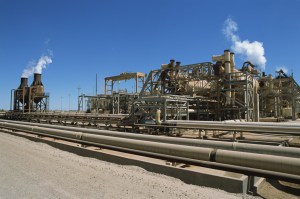 A recent story posted by the Worldwatch Institute addresses this issue. The story in of itself has nothing new, in that it discusses the various elements in play but offers no new insights. But it does cause us to mull the issue, because it has come up repeatedly at lectures I have given on natural gas-related matters.
We have blogged on and published the view that shale gas production will keep gas prices low. This is largely due to shale gas wells being on land and shallow by industry standards. These wells can be in production in 30 to 60 days after commencement. This short duration effectively keeps a lid on the price. If the three month strip is seen as going up, new wells can be in production well within three months. This sort of certitude will also discourage speculative investment in the commodity. The floor price will get set by the conversion from coal to gas for electricity. 50 percent of coal plants not expected to meet the latest EPA standards on mercury and NOx are over 40 years old. So these fully depreciated plants will not be refurbished. The only options are new coal, nuclear and natural gas. New coal is disadvantaged on price alone until a natural gas price of $8 per million BTU. Today that price is $4.40. So, with the aforementioned ceiling, coal is not the economic choice. Nuclear has suffered a blow due to the Fukushima Daiichi disaster. So, natural gas will be the fuel of choice. Eventually, the shift to gas will cause the price to rise, but the lid will still be around $8.
Cheap natural gas will also cause a shift from oil to gas whenever possible. This additional demand will keep the price up in the medium term. So, let us assume a price of $8 as the stable price. At this price, electricity will be delivered at a little under 7 cents/kWh. This is the grid parity price that alternatives will have to meet on a direct economic basis.
This benchmark price is lower than the fully loaded price of new nuclear plants, which will be over 10 cents. Currently, wind delivers at 9 to 16 cents, depending on where it is. Offshore wind may be higher yet at this time. Wind also often suffers from the need to add transmission infrastructure. This is especially the case for offshore facilities. There is also the celebrated case of Boone Pickens terminating a major land-based investment due to absence of concrete plans to add transmission lines.
Strictly from a techno-economic standpoint wind still has an upside. Engineered solutions are likely to drop the price from current levels. But it continues to suffer from diurnality, and so needs to be companioned to another source or to storage mechanisms.
Policy Matters: Without a price on carbon, the carbon-free alternatives of wind, nuclear and solar are seriously disadvantaged. Taxes are anathema to the current Congress. Cap and trade has not worked particularly well in Europe, in part due to the uncertainty, which effectively increased the discount rate on investment. Also, any cap and trade conceived by Congress will undoubtedly have numerous exclusions and grandfathering. The province of Alberta in Canada has an interesting model. They tax high carbon footprint heavy oil production over a certain volume. The money is placed in a special fund expressly for the purpose of addressing environmental issues associated with oil and gas. Such directed use of tax proceeds is more palatable. Conceivably, the fund could subsidize renewables for a period of time.
Finally, one could resort to the current method of imposing a renewable portfolio standard. This in effect is a tax on the consuming public because the renewable energy costs more. The solar subsidy in Germany is passed on directly to the consumer as well. But that is largely possible due to the considerable influence of the Green Party. Short of taxing conventional oil and gas, consideration could be given to decreasing the incentives and redirecting those funds.
Conclusion: Cheap natural gas will place every other source of electricity production, including renewables, at a disadvantage for the short to medium term. Reliance on market forces alone will slow the introduction of renewable energy. Policy mechanisms are needed to level the playing field, at least from the standpoint of carbon neutrality. The most equitable methods may be a U.S. analog to the method used in Alberta. By all accounts, that policy is embraced by the public and industry alike.
Fukushima and Beyond
April 27, 2011 § 1 Comment

Source: Areva
This is fairly representative of the discussions at the Breakfast Forum held on April 21
The Fukushima Daiichi disaster is now classed with Chernobyl in magnitude. It is clear that the single most significant cause of the radiation leakage was the power blackout. The cascade of events began with the tsunami, which breached the wall. Tsunamis are classed by the height of the wave upon shore impact. This one was judged to be at 46 ft and the breach occurred because the seawall was designed for 19 ft. Two previous tsunamis, in 1933 and 1896, had reportedly been substantially higher than this one. The numbers themselves may be somewhat suspect because these measurements are not standardized, and certainly were not a century ago. Nevertheless, the seawall appears to have been under designed.
The flooding caused what is known as a station blackout. No power of any sort. The primary reason for this appears to be that the backup diesel generators were in the basement, and got flooded. The reactor had in fact been shut down well before the wave hit. But nuclear reactors continue to generate heat after shut down, although this progressively decreases. Cooling water is required, in the absence of which the fuel melts and releases radioactivity. Due to extended power failure the core sustained damage. The resulting reaction with water produced free hydrogen. The systems designed to prevent explosion of this hydrogen did not function, in part due to the lack of power.
The power loss was the single weakest link in the chain. The significance of this to the US situation is that spent fuel is stored in a water-cooled environment at 80 locations and these are largely already at full capacity. This is occasioned by the policy decision to not store at Yucca Mountain. So, while tsunami mediated flooding is not likely on the mainland, power loss due to other reasons, including sabotage, cannot be ignored.
Policy Implications: Each new disaster increases the understanding of some aspect of the cause of catastrophic events. Corrective actions are taken and the next one likely has a different root cause. This does raise a question regarding the futility of attempting to prevent Black Swan or Perfect Storm (take your pick on popular descriptors) events. The generally held belief is that these are results of combinations of very low probability events. So further decreasing the probability of each is possibly not terribly productive. But doing nothing in the face of calamity is simply not an option. Besides, in the case of Macondo, certain measures have emerged which definitely will improve overall safety. In this one, a clear finding with broad scale implications is that of the loss of cooling and the implications to back up power and other safeguards. The applicability to spent fuel storage is direct and decidedly important. Were it not for this incident, the public certainly would have seen the spent fuel repository debate as relegated to the cognoscenti. Now they can be communicated to with simplicity and accuracy on the risks of distributed storage. Maybe, just maybe, this particular ostrich will raise its head out of the sand and we will get a national plan that makes economic and environmental sense, and yet is responsive to the nuclear proliferation concerns.
The time span between major energy related incidents was 25 years in this case and 30 years for deepwater oil spills. One cannot help but wonder whether complacency is a factor. Certainly in the case of the Macondo spill, industry experts have acknowledged this as a factor. One theory advanced in our Breakfast Forum was that of worker training and longevity on the job. The Navy was cited as an organization that deals with reactors routinely but does so with a workforce that is exceedingly well-trained and with strict safeguards. The energy industry tends to be cyclic and profit motivation is definitely in play, as repeatedly alleged with regard to BP in the Macondo incident. Regulation, preferably self imposed by industry, could address the matter.
Of interest is the observation to date that the earthquake per se did not damage the reactor. This despite the fact that at 9 on the Richter scale, this is one of largest ever recorded. California can take some measure of comfort, one assumes.
Consequences to Power Production: Germany has already reacted to withdraw the permit to extend the life of about 8 reactors, which is a reversal of an earlier decision. Switzerland is stopping issuance of new permits. Any country that takes measures such as these is left with few choices. The principal one is natural gas generation. In the case of Germany, this means increased reliance on Russian gas or LNG imports. Also, replacing nuclear with gas creates a carbon deficit. All previous scenarios for carbon mitigation relied heavily on nuclear as a zero carbon source. To the extent that this is seriously compromised, the low carbon future targets are even greater jeopardy.
Wind is the leading candidate to provide a carbon credit. It is closer than solar in achieving parity with conventional sources. One feature in its favor is that it is highly modular; production can commence quickly even as more capacity is being added, provided the delivery infrastructure is in place. Aside from the fact it too is buffeted by environmental and aesthetic opposition, the diurnal aspect appears to limit the total contribution in a given area. Many believe the cap to be around 20% but credible studies supporting a particular number are not in evidence. Also, we don’t know the extent to which new storage measures and the smart grid could ameliorate this drawback.
The nuclear option faces an interesting dilemma. Already burdened by high capital costs and long lead time to first production, the additional risk is bound to increase the discount rate. This will increase the investment even more. Purely from the standpoint of economics, extending the permit life of existing reactors, albeit with improvements, will be the economically driven choice. The irony here is that this will perpetuate older, and presumably somewhat less safe, technology.
All energy comes with a price. It is a question of choice. You can’t leave it, so best learn to love it.
A CONTAGION OF GOOD EXAMPLE
April 20, 2011 § Leave a comment
 A Sustainable Energy Future Will Require Changes in Public Behavior
At a recent meeting at Duke University, President Brodhead was asked about how they prepared students for the real world. He responded to this softball question in a conventional manner and then ended with a statement of belief in “a contagion of good example.” Having delivered this almost sotto voce, he then left with no further explanation. I took him to mean that the Duke community, by its actions, instilled lasting values in departing students.
Although I was willing to give him credit for this nice turn of phrase, I looked it up. The earliest reference is in Luke where the belief is stated that the contagion of good example is “the best means for inculcating virtue.” Jesus is believed to have used this in his method of teaching. The theologian philosopher George Berkeley is quoted as “neighbor will emulate neighbor and the contagion of good example will spread.” This last brings us closest to the situation with green behavior today.
A number of offerings can be expected in the arena of green energy. Examples would be electricity from renewable sources, car variants such as hybrids, natural gas and electricity powered vehicles, and smart meters in homes, to name a few. These involve making choices. Innovators of technology know that the barrier to wide-scale adoption is particularly high when it involves substitution of something familiar. Research in the motivation of early buyers of hybrid electric vehicles showed a disposition to be being “seen as green.” This is close to Berkeley’s neighbors emulating neighbors. But we all know that early adopters are not necessarily representative of the general population. Widespread adoption will require a viral spread of beliefs. This is why the word “contagion” is so appealing in its very unusual use in a positive context.
Robert Cialdini and co-workers at Arizona State University conducted an interesting set of experiments in Phoenix hotels. One set of guest bathrooms had “re-use towels to save the environment” type placards, as we have all seen ourselves. In another set of rooms, the placards read that the majority of guests in that very room had re-used their towels. The incidence of compliance in these latter rooms was 33% greater than in the control set. Is this an incidence of at least a minor infection of good example?
Energy efficiency is possibly the most powerful weapon in the clean energy arsenal. This is because no matter how dirty the energy source, using less is a net positive. Some approaches will be transparent to the public, such as the sub-one watt standby power standard being proposed for household appliances. However, the choice to keep each one of these plugged in even when not in active use is a conscious one, at least for power hogs such as phone chargers and printers. Studies have shown that standby power accounts for between 7 – 10% of total household consumption. To be perfectly clear, this power is simply enabling a convenience feature, and therefore amenable to behavior modification. Technology can and will address this issue. But low power devices will only get you so far. Can people be pushed in that direction without the compulsion of laws? Richard H. Thaler and Cass R. Sunstein suggests that this is possible, in their influential work Libertarian Paternalism. Their concept is further elucidated in their book Nudge.
The Smart Grid is essential to support diurnal sources of electricity such as solar and wind. It is also needed to assure the proper implementation of electric vehicles. An aspect of the Smart Grid is smart meters in homes. These will provide homeowners with considerable data on their energy usage and offer the opportunity for more efficient use. Time of day pricing will help. But ultimately, the concepts flowing out of Cialdini’s study cited above are likely to play a role in influencing behavior. Neighbors emulating neighbors may be literal in this case.
Fukushima Fallout
April 12, 2011 § 1 Comment
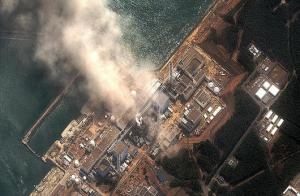 Some preliminary thoughts as prelude to our upcoming Breakfast Forum
The Fukushima Daiichi disaster will undoubtedly have a marked effect on the energy policies of nations. There is something about nuclear fission accidents that evokes strong fears out of proportion with the actual threat to human well-being. People with anti-nuclear views will be emboldened, such as what happened in Germany.
Consider the German situation – A significant move away from nuclear is only possible with massive new natural gas based capacity. This will apply elsewhere as well as discussed later. Natural gas replacing coal gives a net improvement in carbon emissions. Decidedly not so when replacing nuclear. So, carbon mitigation targets will have to be met in other ways. The country has already placed a big bet on solar. But with programmed reductions in subsidies, the future is increasingly cloudy. The true elephant in the room is Russian gas. Further reliance on gas for power means increased reliance on either Russia or LNG imports.
An LNG Revival: If one builds on the premise that in the short term, a nuclear future will at least be rendered bleaker, the only fast response alternative is natural gas. Coal has a longer lead time and makes the carbon emissions situation decidedly worse, unless carbon sequestration is accomplished. A scant five years ago a massive shift from nuclear to gas would have been untenable from the standpoint of a price explosion brought on by the spike in demand. Today we know that U.S. gas supplies are abundant and LNG originally destined for the U.S. may now be directed to countries such as Germany. Japan itself, although seemingly committed to a strong nuclear future, will be a big purchaser of LNG in the short term.
The sudden draw on natural gas supplies could have interesting consequences. As we previously posited, U.S. natural gas prices will stay in a band between $4 and $6.50, with excursions to $8 for decades due to the unique attributes of shale gas. The demand increase discussed is unlikely to materially change that. But, gas price in Europe and Japan, to name just two, will undoubtedly see a sustained uptick. U.S. gas interests will therefore find a lucrative LNG export business hard to pass up. While production costs are not as low as in Qatar or Iran, the demand will likely support all sources. Also, western companies constructing LNG trains will be winners.
European shale gas exploitation will also pick up. The importance of this resource to reduce reliance on Russia just escalated. We can also foresee increased efforts to exploit those conventional gas resources which are currently dormant due to high carbon dioxide (for example in Malaysia), nitrogen (for example in Saudi Arabia) or hydrogen sulfide. All of these require improvements in technology.
Effect on Renewables: Despite the initial flight to gas, the net effect on renewables will be positive, provided the world continues to believe that global warming due to carbon emissions is a concern. This is primarily because the replacement of nuclear with gas has a negative effect on carbon emissions and means to ameliorate will be ever more important. The need for this will put increasing pressure on the enablers such as effective storage. In the near term, wind should be the winner because it is closer than solar to parity with conventional production costs. So a massive scale up is feasible but is hampered by the diurnality. Analysts believe that some wind heavy parts of Europe are maxed out. A greater fraction from wind appears not easy to assimilate. Smarter grids allowing for better load leveling and cost effective storage will take on greater urgency. An interesting possibility is that distributed power, including combined heat and power, may acquire greater currency. Policies governing utilities will need adjustment.
In fairly short order the Macondo oil spill and the Fukushima Daiichi disaster have brought into focus the downsides to two major sources of energy. In each case, the reactions have been peremptory and the voices against offshore drilling and nuclear energy loud. The nuclear substitute of shale gas has organized opposition on environmental grounds. Wind is buffeted by aesthetic arguments. Lost in the rhetoric is the realization that it is always going to be about choice; picking one’s poison as it were.
Energy: we can’t live without it so we must learn to live with it.
SHALE GAS WILL CAUSE A SECULAR SHIFT FROM OIL TO GAS
April 10, 2011 § 1 Comment

High oil/gas price ratios will transform the petroleum derivatives industry
The recent unrest in the Middle East has caused a spike in the price of oil, with immediate impact on gasoline price, while the price of natural gas has remained stable. This underlines the principal difference in these two essential fuels. Oil is a world commodity while gas is regional. They also serve largely different segments of end use. Consequently, the fact that today’s gas is one-fourth the price of oil in terms of energy content has little relevance in the main. However, if the energy industry believes that this differential will hold for a long time, technology enabled switching will occur. In this blog post, we will predict a shale gas enabled future of gas at low to moderate price for a long time. At the same time, we subscribe to the view of an upcoming plateau in oil production, which will drive oil prices higher. These two trends taken together assure a high oil/gas price ratio. This will cause systematic switching where possible. We discuss two essential areas where this is likely: transport fuels and propylene, the latter being the precursor to many important industrial goods, principally polypropylene.
Why natural gas price will stay low to moderate: Shale gas has unique economic characteristics when compared with conventional gas. It is located on land and at relatively shallow depths. The exploitation of the resource does have environmental hurdles, but with the proper combination of technology, transparency and regulatory oversight, these can be traversed.
If allowed to be accessed, shale gas offers the promise of cheap gas for decades. If demand drives up price, this resource can be accessed within 90 days of the decision to do so, provided access and delivery infrastructure are available. This single fact will keep a lid on the price and discourage speculators. To give a frame of reference, conventional offshore gas has a lead time of at least four years. That is the sort of lead time this industry is accustomed to. So a fast response lid on prices is a new phenomenon, driven by this unusual new resource.
Natural gas prices can be expected to stay in a tight band between $4 and $6.50 per million BTU, with excursions to $8. The floor will be driven by demand and the ceiling by the aforementioned fast response to new production. At least two oil companies operating in the Marcellus in Pennsylvania have stated that at $4, they have strong profits. Newer technologies and further experience will continue to drive down production costs. One example is refracturing of existing wells after initial production tails off. A unique feature of this type of reservoir is that a properly designed refrac will deliver new gas approaching initial production numbers. This would be at a fraction of the original cost because the well already exists. This and other technological advances will, in most instances, more than offset the costs of better environmentally driven practices.
Impact of predictably low gas prices: High oil/gas price ratios will drive oil substitution. Here we will discuss just two areas of impact. The obvious high volume one is a replacement of the oil derivatives for transport. Technology exists today to convert natural gas to gasoline, diesel or jet fuel. Predictably low cost natural gas will spur further improvements regarding the economics of these processes. Also, Liquefied Natural Gas (LNG) for long haul transport and Compressed Natural Gas (CNG) for buses, taxis and even cars will be strongly enabled.
An interesting analysis is the impact on petrochemicals such as propylene. One of the derivatives, polypropylene, is ubiquitous in our lives: roofing, carpets, bottles and bendable plastics, to name a few. For years when oil and gas pricing was in greater parity, propylene was a bi-product of ethylene production in oil refineries. It is also produced by tweaking the catalytic cracking process, at the cost of a smaller gasoline fraction. A refinery can change the mix essentially at will, presumably based on the relative profit potential.
But with a worsening oil/gas price ratio, ethylene production increasingly switched to a gas feed stock. Unfortunately, this process produces very little propylene as a bi-product. So, as reported recently in the Economist, in the last two years propylene price has gone up 150%.
A predictably low price for gas will allow for plants dedicated to propylene production from gas. At least three companies, Lurgi, Total and UOP, have the technology at an advanced state. This would make the greatest sense for gas that is otherwise stranded – Prudhoe Bay gas comes to mind. The gas pipeline from Alaska is no longer viable if shale gas production in the US and Canada continues apace. Produced gas continues to be reinjected. The real price for this gas is well below the price in the Lower 48. The economics of conversion to transport fuel or plastics feed stock is compelling.
Sustained high oil/gas price ratios are predicted. This will drive a secular shift from oil to gas.
ENERGY SECURITY: What Does It Really Mean?
April 7, 2011 § 2 Comments

Source: mfrtech.com
This is loosely based on February’s Breakfast Forum topic
The International Energy Association (IEA, not to be confused with the domestic version EIA) defines energy security as “uninterrupted physical availability of energy at affordable prices, while respecting environmental concerns.” To most, this is not the only aspect. A straw poll of the general populace would likely find that it is more concerned with energy independence. In this context, energy equates almost singularly to oil, since it is reliant on imports while other forms of energy are largely generated domestically.
Reduced reliance on imported oil resonates on many levels. Increased domestic production helps, but not as much as substitution of conventional transport fuels. Both measures serve to create jobs and help the balance of payments. We consume roughly 18 million barrels of oil daily, as compared to about 21 million a scant two years ago. Of this, about 60% is imported. At $100 per barrel, that represents about $400 billion payments out of this country, creating jobs elsewhere. Compared to Europe, our taxes on gasoline are relatively low, so conservation is not hugely advantageous. This is why electric cars will have better breakevens in Europe than the U.S. But legislation to improve gas mileage does improve efficiency, even though feature creep has cut into that gain. Cars today have more power hungry devices than they did 25 years ago, and much larger as well. The Toyota Corolla of yesteryear is a mere shadow of its current self.
Climate change arguments are steadily losing traction in Washington, D.C. Energy security on the other hand is in play. There is also something about the word “security” that gives comfort. Witness the clever coining of the Homeland Security name, invoking visions of a warm fireplace and apple pie aromas. Then the naming folks lost their way with the Bureau of Ocean Energy Management and Regulation replacing the simple Minerals and Management Service. MMS was replaced by BOEMR, which unfortunately comes out sounding like ”bummer” – but enough with the digression. Energy security objectives could result in low carbon solutions. Certainly, natural gas replacing diesel will reduce net emissions, as well as biofuels. Electric cars achieve this objective by shifting the emissions away from the tailpipe to a more tractable location, the power plant. They also are about 50% more efficient than conventional engines on a “well to wheel” basis. So you simply consume less energy per mile no matter what the emissions.
Economic security was the basis for the IEA definition. Since energy is central to our economic being, secure affordable access is a must. James Hamilton at UC San Diego has a somewhat controversial position that essentially states that the last recession was largely driven by oil price shocks. In his previous work, Hamilton has demonstrated at least a temporal correlation between recessions and oil shocks. The importance of this observation is that we have previously subscribed to the position that an upcoming plateau in oil production will lead to a serious supply imbalance unless we move immediately to oil substitution. Consequently, oil substitution may no longer be a choice, purely from an economic security standpoint. The climate change positives will simply be lagniappe (meaning “gravy” in Cajun vocabulary).
Military security is a factor as well, although seemingly in an indirect fashion. Military measures to keep the oil shipping lanes open have other defense and foreign policy purposes too. Many still believe that the Iraq war was about access to oil. If so, the return on investment will certainly not be high. Even the business developed due to oil revival in Iraq has not benefitted domestic firms any more than it has European or Russian for that matter. But there is strong precedence for wars being fought, and questionable governments being supported in the pursuit of energy access. Finally, any military effort relies on secure access to transportation fuels. The Germans realized this in the build up to WWII. They refined the Fischer-Tropsch technology invented in the late twenties. The entire war effort was fueled by transport fuel from coal.
The Post-election Energy Future
December 19, 2010 § Leave a comment
 This post is loosely based upon the November 18th RTEC Breakfast Forum topic, Implications of New State and Federal Leadership on Clean Energy Enterprise
The midterm elections produced dramatic shifts in the political balance in Congress and both legislative bodies in North Carolina. The effect on energy policies can be expected to be significant as job creation will trump climate change. Conventional energy will be up while ethanol will be down. A price on carbon, barely possible in the previous regime, will now be off the table. That will likely put the Integrated Gasification Combined Cycle (IGCC) variant of clean coal on life support. It will be interesting to see whether son-of-SuperGen in Illinois will survive.
National energy security will move up on the agenda. Steve Chu and his aggressive research agenda will go under the microscope. Business friendly policy will be in and energy efficiency should be unaffected. In the “anybody’s guess” category is the federal subsidy on electric cars. In North Carolina, oil and gas exploitation will be in. Wind could be buffeted because of fervent championship by the past administration; hopefully they will rise above that. These and more are discussed below.
Energy security considerations are likely to lead to encouragement of domestic resource exploitation. This will entirely be in the province of oil, and to a lesser degree gas. Replacing imported oil with domestic fuel substitutes will create jobs. The obvious implications will be toward deep-water exploitation related policy. Also, expect considerable pick up in oil from tight rock, such as the Bakken and Eagle Ford prospects.
Electric vehicles fall in the category of oil replacement. The current subsidy of $7,500 per vehicle will probably be kept, but the timetable for taper off and elimination will probably accelerate. General Motors has been reborn and their results, including the post IPO stock price, are healthy. Their considerable bet on the Volt and the attendant job creation will be a factor. Some corporations, most notably GE, are doing their bit in this regard. GE recently committed to purchasing 25,000 electric cars from GM and Nissan by 2015. Their purpose was to give the manufacturers the certainty to move into mass production.
Biofuels will be a mixed bag. Drop-in fuels such as alkanes from plant matter will be favored over ethanol, and mixed alcohols will be somewhere between. This is because of the plug-and-play convenience of drop-ins; nothing different about the engine, the fuel pump or the distribution infrastructure. A story in the Economist expands on this point. Alkanes made with sugar as feedstock may be advantaged by the fact that Brazilian sugar has no import tariff. In fact, there is a good chance that the 50 cents per gallon tariff on Brazilian ethanol will go away, as may the 52 cents subsidy to blenders of corn derived ethanol into gasoline. In a burst of candor, Al Gore admitted recently that his Senate tie-breaking vote for it was solely for the purpose of being elected. He now says the subsidy for first generation ethanol, read corn based, must go away. The new Congress will likely make this happen. But not any time soon. The recent Obama compromise on taxes contained an extension of the ethanol subsidies.
Low carbon sources of energy will be disadvantaged by carbon not having a price. However, the cap and trade system in Europe has not really worked either. The price has fluctuated and has generally been too low to make much difference. Consequently, the responsibility will shift to clean energy, making it purely on economic terms. This is not all bad because if and when carbon emissions carry a penalty, the alternatives will be even more advantaged.
Wind energy from certain sources is already very competitive with coal, especially if externalities relating to the environmental cost are considered. Help in the form of federal support for research and development could be helpful. The recent report from the President’s Council of Advisors on Science and Technology suggests major funding initiatives and associated models in revenue generation for this. But the revenue models are in fact taxes on existing energy units. While modest in size, the new Congress will likely be opposed unless job creation is pitched as a principal benefit. Healthy skepticism of federal coffers of this sort will also be an impediment. The fund created previously by a tax on nuclear energy was not seen as spent wisely. Even France has gone away from this model. The French Petroleum Institute (IFP) used to be funded by a tax on vehicle fuel. Similarly, the Gas Research Institute in Illinois was funded by a tax on natural gas transport. Both models are now defunct.
In North Carolina, offshore drilling will potentially become permitted but is unlikely to lead to any actual activity because past exploration of the Atlantic coast has not been promising. Even if allowed, the oil industry will probably invest elsewhere. Shale gas drilling might find a home in the state. It is not believed to be as prospective as the Marcellus in Pennsylvania and New York. But economic accumulations are plausible. Pennsylvania leaning on regulation to assure environmental security will likely have to be studied and used as a basis for policy.
Many see the new sheriff in town as a blow to sustainable energy goals. Climate change based policy may well take a back seat. Energy security drivers and energy efficiency measures, however, will have an important impact. The International Energy Agency has forecast that well over 40% of carbon mitigation will need to come from using less; carbon dioxide sequestration will account for only about 10%. In conclusion, energy efficiency measures are important and largely unaffected by the political shift.
Beyond Ethanol
November 4, 2010 § Leave a comment
 A recent article in the Economist describes an important new direction for biofuels, namely the pursuit of drop-in fuels. These are synthesized hydrocarbons and can be used directly in any proportion for engines running on gasoline, diesel or jet fuel. The last two cannot be served by ethanol.
As we have discussed in the past, ethanol has about 33% less energy than the same quantity of gasoline. This calorific penalty decreases as we move to higher alcohols. The article discusses ongoing work on the production of butanol. It has 4 carbons compared to 2 in ethanol, so it has more calories. It is very similar to gasoline in calorific content and less corrosive and water absorbent than ethanol, and so a better substitute.
Most of the story is directed to the production of alkanes from sugar. These are straight chain compounds with the formula CnH2n+2. Conventional oil derived fuels have this formula as well. The number n is about 7 to 9 for gasoline and about 12 to 16 for diesel and a bit higher for jet fuel. So, alkanes with the right number are for all practical purposes direct drop-ins for these conventional fuels.
Herein lies the attraction. Also, being tailored, often through genetic engineering, the composition will be predictably uniform. This is not the case for the input to refineries from a variety of crude oil sources. In fact oil refineries today are forced to be very picky about the mix of crude they will accept. Seed based oils also suffer from this variability.
No small wonder, therefore, that many of the leading players in the drop-in biofuels space are supported by major oil companies. The list includes ExxonMobil, Shell and Total – all heavy hitters.
The reliance on sugar as feed stock is of note. Today, Brazil is the only source for economical sugar for this purpose. Tariffs apply only for ethanol; at least for now. So the long term potential for this feed stock can be debated.
One company is even reported to be using sugar to grow algae for diesel. This is quite a departure from the original allure of algal diesel. It was seen as using sunlight and waste carbon dioxide, a sustainability home run of sorts. Now we see folks going to the dark side of algae, literally. These algae are grown in the dark! The photosynthetic part is transferred to the growing of sugar. So we still have the sunlight and carbon dioxide (from the air in this case) put to use.
An interesting twist is the use of existing ethanol plants by some of these companies. This is a good trend, to deploy assets created by a flawed national policy and subsequently idled by realities.
So, what of corn and cellulose? Both are challenged by the fact that the chemical structure renders them more difficult to convert to alkanes. Of the two, corn, while simpler to react, is the worse in part because of water usage. Cellulosic materials such as grasses offer the promise of draught resistance. Price of Brazilian sugar over the long haul will be a determinant.
An interesting avenue for biomass in general is pyrolysis such as practiced by RTI International under DOE funding. This produces a liquid akin to crude oil. Close enough to merit inclusion as a portion of the feed to a refinery. This is the pre-refinery analog to a post-refinery drop-in fuel. Requiring no modification to current practices. A chemical plug and play, as it were.
Finally, the Economist story discusses the place of electric cars in this context. They opine that while alcohol will get trampled, drop-in fuels will survive. In the next thirty years, gasoline will continue to be used to a significant degree. So, ethanol will continue to be used as a means of assuring complete burn of the fuel. This use as an oxygenate came about from the outlawing of MTBE, but is only needed at the 6% or so level. Beyond that, ethanol is a liability on many grounds and will probably fade away.
But drop-ins will hang around a lot longer. The Beyond Ethanol story will feature electric cars but drop-ins will get serious second billing.
Energy Engineering in the Triangle
September 30, 2010 § Leave a comment
 The national imperatives of energy security and sustainable energy development will drive the creation of new businesses centered around alternative energies. We expect these to fall into t wo areas: replacement of oil for transportation and less carbon intensive electricity production. In addition, research regarding intelligent electricity grid has become an interesting combination of these two areas.
Furthermore, the more efficient use of energy will also play a central role in sustainability. The engineering work force required to execute all of these would benefit from college training that recognizes these specific fields of study. An Energy Engineering (En E) curriculum could well be the solution. Here’s what such a discipline might entail.
The foremost disciplines in the general field of energy engineering are those of Nuclear Engineering and Petroleum Engineering (Pet E). We will use the latter for discussion because it is more widespread and serves a mature industry fairly well with a defined set of required training (Nuclear is similar). Thus it is able to sustain a specialist discipline.
This will not be the case for the En E program serving the alternative energy industry. The industries served could have elements of the following: solar electricity, wind electricity, biofuels with biochemical and thermochemical variants, smart grid and related enablers, energy efficient devices, batteries and other storage, clean coal, carbon sequestration, electric cars and related endeavors such as fuel cells, and hydro. This breadth alone hinders a unique En E four year program.
Even Pet E is subject to the whims of the industrial cycle. In a recent trade publication, an influential department chair recently put out a plea for hiring their graduates. One of the problems is that the hottest play in petroleum today is shale gas. They are hiring, but the volume required is in the hard core disciplines of Mechanical, Electrical and Chemical Engineering, not Pet E. In fact, far more of these comprise the petroleum work force in general. Alternative energy programs should use this knowledge as a guide.
A minor not a free standing major
The solution is to offer concentrations in En E, perhaps even minors. These would be enhancements to core engineering degrees. There would be an analog for the sciences, wherein a Chemistry degree could be supplemented with an Energy Science concentration.
Such concentrations would be expected to comprise four to five courses of nominally three units each. Courses would be selected from a menu, with the selections directing the student to particular industries. But the key to this approach is that a down cycle in that industry is not a catastrophe. The student can rely on the core engineering skill set for an entry level job.
Social Science is a key ingredient
An important element of this minor would be the treatment of the social science component. Engineering curricula typically requires few social science courses. But an En E concentration (minor) will enable students to learn more about the social science approach to sustainable energy.
In order to incorporate this concept into the minor, students would be required to choose courses from a set list that include the themes of energy and the environment. The intent would be to learn the principles of economics, psychology and the like, but linked to an energy setting. This could necessitate modified courses in those departments. Energy is a field of considerable interest to students today, as evidenced by surveys in the local institutions. So, such modifications would likely be welcome at a broad level.
The 3 U offering
When the offerings are compiled there will undoubtedly be gaps in faculty resources. NC State already has a concentration in power engineering, but even they will face gaps in other areas. The Triangle area offers the unique opportunity for a program that allows for collaboration between all three universities. We are referring to this as the 3 U solution.
Bi-lateral programs already exist, including the Robertson program (UNC and Duke) and the Biomedical Engineering curriculum (NC State and UNC). While faculty additions will be needed, the resource pooling will allow the program to get on track more quickly. RTI can also be expected to be a player, most likely in the biofuels space. The possibility exists for the participation of some of the RTP powerhouses playing in the energy space.
In short, the Triangle area is unique in that three important research universities participating in the energy space are in close proximity. Add to that the presence of RTI, an unquestioned leader in energy research, with a recent Department of Energy $169 million award directed to carbon sequestration. This powerful combination allows for a jump start to Energy Engineering. No other area in the world has this capability.

