
METHANOL HAS MOMENTUM
March 10, 2012 § 10 Comments
Currently there is national handwringing over the increasingly high price of gasoline. This appears to have Presidential election ramifications. A lower cost substitute for gasoline is good politics. Bills are pending in both houses of Congress to impose an Open Fuel Standard. This would require all new cars by 2017 to be able to operate on all proportions of gasoline, ethanol and methanol. From the standpoint of giving consumers choice for something approaching $100 per vehicle, this had always been a good idea. But persuading gas pumps to supply alternatives was going to be difficult because volume could not be guaranteed. Also, alcohols could not be predictably lower cost than gasoline. So, while the choice would be enabled by the legislation, unless at least a significant portion of the populace was likely to make the alcohol choice, fuel stations would not be persuaded to carry the product.

Cheap shale gas has essentially removed the uncertainty on methanol pricing. By contrast ethanol from corn and sugar will depend upon commodity prices and inherent variability in the same. Economical ethanol from biomass is not a sure thing. On the other hand methanol from biomass, or coal for that matter, is straightforward. Of the two, ethanol is preferred because of higher energy density. It has about 33% fewer calories than gasoline of equivalent volume, whereas methanol is disadvantaged by about 45%. Ethanol is also easier to store and handle.
Methane can be oxidized to a mixture of carbon monoxide and hydrogen known as synthesis gas or syngas for short. Syngas is a basic building block from which a variety of chemicals can be synthesized. The simplest of these is methanol. Consistently cheap methane equates to consistently low cost methanol. Because of the mileage penalty of about half in comparison with gasoline, methanol will need to be less than half the price of gasoline. Assurance of this boils down to the relative prices of oil, from which gasoline is derived, and natural gas. We have predicted that natural gas will remain low cost provided shale gas development is permitted. Oil on the other hand we forecast as likely to see a sustained increase in price in the ten year time frame. Furthermore, oil pricing will be subject to the whims of Middle East turmoil, as evidenced today with Iran/Israel war drums. This will cause uncertainty in gasoline price at the pump. Natural gas on the other hand is a regional commodity and US pricing will by and large be impervious to world events. The upshot of all of this will be sustained favorable ratios of methanol to gasoline prices.
At the time of this writing retail gasoline was at $3.79 and methanol wholesale at $1.13, so let us increase that to $1.50 to include retail margins, tax and the like. This is well below the factor of two. Furthermore, almost all the methanol is currently imported. Several companies have announced plans to add domestic capacity, driven by cheap natural gas. When this happens, we can expect a drop in price of methanol. Ongoing research is targeting direct conversion of methane to methanol, skipping the syngas intermediate step. One less unit operation is likely to drop the price.
Consumers given choice are likely to find a sustained low price for methanol compared to gasoline. However they will drive only half the distance on the full tank, a bit more with M85 (an 85% methanol 15% gasoline blend). This range penalty will be a minus. The plus in addition to price, will be substantially lower emissions, which could be a driver for some consumers. They will essentially be trading more frequent refueling for the green feeling. Eventually, new cars may install larger fuel tanks to accommodate the demand.
A wild card in the longer term would be engines that took advantage of the higher octane rating of methanol, 117 as compared to 87 for regular gasoline. Today dragsters and Indy race cars use methanol because with high compression ratios they get a power boost. A 2010 report from the MIT Sloan School (see comment below for the link) suggests the feasibility of an engine that injects methanol on a programmed basis. This technique causes an effective compression ratio even greater than the number mentioned above. The result is a small spark ignition engine with mileage that exceeds that of a gasoline fueled machine by about 35%. So, harnessing the higher octane rating goes even beyond wiping out the calorific penalty. They also believe that the cylinders would not need to be excessively heavy, and so will be lighter than the ones for high compression diesel engines. This appears to offer the promise of an engine not costing much more than a normal one, and likely less than a diesel engine. This would involve re-tooling by automobile manufacturers but not radically. A significant attraction in the medium term will be in meeting CAFÉ goals with lower emissions. In the long term, biomass derived methanol will make for a truly sustainable transportation future.
Vikram Rao, Executive Director
THE MILITARY AND ENERGY SECURITY NEXUS
March 1, 2012 § Leave a comment
The military is the largest consumer of energy in the public sector, consuming 5 billion gallons of fuel in 2010. Access is not really the issue even in times of tight supply. But it is incumbent on the military to reduce its reliance on fuel while at the same time not sacrificing operational effectiveness. This applies to all forms of energy, not just fuel for transport, although that is the one with the greatest imperative.
During the Iraq war there was great deal of public angst with the price of fuel for the war effort, and many in the supply chain got blamed. The fact is that a captain in a forward emplacement is not worrying about the price when he or she needs fuel urgently. The monetary cost aside, the human cost of such delivery is substantial. In the Iraq and Afghanistan wars in 2007 an estimated 3000 military and civilian support personnel were killed or wounded while transporting fuel or water. Reduction in fuel usage, substitution with more benign alternatives, local sourcing of energy and water, these all ought to be priority strategies for the military today.

The time was never more right than now to innovate in reducing cost of energy in the military. The budgetary toll will be heavy this year once the congressional squabbling is over. One war has wound down and another on the way to exit. The next war must be supported by low energy methodology running the gamut of lighter vehicles (fits well with the smaller lighter army motif in vogue today), fuel replacement to minimize high risk convoys of diesel and gasoline, off grid distributed power with renewable energy supported by micro grids, desalination of saline ground water to minimize water transport, and electric vehicles when feasible, because distributed power is lot easier than distributed fuel generation.
Semi-permanent bases domestically and abroad could even invest in distributed fuel production. If natural gas were to be readily available, small footprint production of a drop-in fuel would not be out of the question. Given this possibility, the military ought to fund such developments rather than the massive coal and gas to liquids projects that it has been wont to do. In any case, small scale distributed power in the form of mini-nuclear (what would be more secure than a military base?), wind and solar, combined with a micro-grid could power entire bases off the grid. This not only will give the green feel, but also would render the base relatively impervious to weather or sabotage related grid outages. Certainly in forward locations, the solar option would apply. In some foreign locations the base could consider providing surplus power to the neighbouring townships and as a result buy goodwill which is sometimes hard to come by for US bases.
Base vehicles are uniquely suited to fuel switch over. This is because infrastructure support for refuelling is straightforward. Furthermore, in the example of CNG and LNG substitution of diesel and gasoline, where feasible the engines ought to be modified to take advantage of the high octane rating of methane (125 as compared to 87 for gasoline). High compression engines enabled by the high octane number will deliver more power and distance for less fuel. Ultimately, civilian versions of these vehicles could capture consumer imagination. We would in effect have a reincarnation of Hummer as a HEAT (High Efficiency All Terrain) vehicle. Bring the HEAT!
The same goes for electric vehicles. Again, distributed electricity is easier than distributed liquid fuel and an electric vehicle delivers 60% more miles per unit of energy consumed. Not only will imported oil be substituted for, but less energy will be used. Only certain vehicles may be suited to electrification, but any gains would also have the virtue of symbolism.
Fresh water transport to front lines does not get much press but is a tractable objective for reduction. The shale gas industry will be learning to deal with low cost water sourcing and treatment. These advances could be used to advantage by the military. Salt water aquifers are fairly ubiquitous, and the shallower they are the less salty. The Defence Department ought to consider sponsoring developments of small footprint desalination, especially targeting the types of salt water anticipated in theatres of action. In foreign locations, the use of otherwise useless brackish water rather than fresh would also have a public relations ring to it.
Every President in the last decade or so, no matter from which side of the aisle, has drawn that bright line between energy security and national security. President Bush, a champion of oil and a onetime owner of oil interests, famously complained about our “addiction to oil”. President Obama recently said “America’s dependence on oil is one of the most serious threats that our nation has faced”. That sounds like a national security statement. So, equating national security to energy security and thence to reduction of imported oil will not be disputed by many.
Vikram Rao, Executive Director
Can NC Profit from Shale Gas without producing it?
February 17, 2012 § 4 Comments
In the midst of the debate in this state on whether shale gas production is worth the environmental risk we posit a different notion. We suggest that the state could create jobs and economic growth whether or not the gas was produced in state. This proposition was discussed at the Breakfast Forum on February 16.
There are two underlying assumptions to this thesis. One is that if shale gas continues to be produced in the Marcellus and Utica, we can expect copious quantities in neighboring states. We can also expect prices to stay low for decades as modeled recently by Amy Jaffe and colleagues. The second assumption hinges on the low price of gas. If it stays really low as it is today, most of the shale gas production will be in the “wet” regions. These are reservoirs with a high component of natural gas liquids (NGL’s) which have a much greater value than methane and so such wells are more profitable. In a typical Marcellus wet gas well today the NGL component more than doubles the value of the methane.
More than half of the NGL in the Marcellus is ethane. A consequence of this shift to wet gas production will be an abundance of ethane. Ethane is very easily “cracked” to ethylene in chemical plants known as crackers. Ethylene is the raw material for a host of useful fabrics and plastics. The alternative method of synthesizing ethylene is from an oil refinery derivative naptha.

source: Energy Information Administration
The figure shows EIA prices for all the relevant commodities. On the vertical axis is plotted the price per million BTU. This unit allows one to compare across different fluids. Clearly ethane is priced well below the NGL composite, which is close to oil. Ethylene derived from oil refining will therefore be more expensive than from cracking ethane. Much of the world’s ethylene is from oil. We could reasonably expect the US to be one of the lowest cost producers of this commodity.
At the Breakfast Forum there was pushback on this point. It was suggested that demand could drive that price up. While this is generally true of most commodities, one would expect the ethane supply to stay high due to the profit potential for the gas producer. Also, from the figure we can see there is considerable head room between current prices and oil prices.
NC Opportunities: Nitrogen fertilizers use methane as the feed stock. 90% of the cost of anhydrous ammonia is attributable to methane. Cheap natural gas equates to cheap fertilizer. At prices today, the raw material will cost about $100 and sell for between $600 and $800 a ton. North Carolina has the opportunity to set up plants to make this conversion, most likely in areas just west of Charlotte. A major pipeline comes in from the north in that vicinity. The area is also currently suffering high unemployment. These would be high paying jobs and lasting a long time.
There was discussion regarding explosive hazard and possibility of odor in proximity to the plants. Anhydrous ammonia is not explosive but one final product ammonium nitrate is also used as an illicit explosive. The suggestion is to produce only the first product and export. Speaking of exports, if international exports are a possibility, rail lines to the coast are very accessible. Also, the value created in this conversion of methane argues against exporting LNG. Exporting ammonia makes more economic sense as we noted earlier in a post. As to odor, obviously fugitive emissions of ammonia could be an issue. But this should be a low probability event unlike the constant odor from some oil refineries.
Currently we import about half of our ammonia needs. This capacity is returning to the US due to the forecasted low methane prices. North Carolina would not be an obvious site for capacity so active steps would need to be taken to secure this.
Ethane cracking in North Carolina does not make a lot of sense. As noted by a discussant the ethane from the Marcellus is most likely to be shipped to the Gulf Coast because the vast majority of the capacity is there. However, we take the view it should be done close to the production and the producing states are taking steps to accomplish that. Shell has announced intent to build a cracker in one of the three states. Where North Carolina could profit is at the next level. Ethylene derivatives include a host of fabrics including polyester. The state could profit from a detailed study examining residual competencies from the previously dominant fabric industry and the bridge to the ethylene derivative fibers. North Carolina State excellence in this area should come in handy. A return to textile roots would be immensely gratifying.
Cheap natural gas and associated ethane offer the opportunity for economic value creation whether or not we produce shale gas in the state.
THE CRANBERRY EFFECT: GAIN WITHOUT THE PAIN
February 3, 2012 § 3 Comments
Cranberry Township in Pennsylvania has seen immense revenue growth due to the shale gas boom. No shale gas wells have been permitted or drilled in the entire township. What they did was create an atmosphere that caused the regional headquarters of shale gas players to be located there. Support personnel such as accountants, lawyers, repair and maintenance outfits and other professionals followed. It was simply a great place to live, work and be entertained.

The Cranberry Effect can be replicated elsewhere with different tactics. One simple one is in the area of fuel consumption. For areas served by natural gas, the use of heating oil for homes is wrong on the basis of economics and the environment. The consumption of heating oil is old and cumbersome. Trucks deliver oil to homes, consuming fuel as they do so, and the combustion process produces more emissions than from gas. And it costs 3 to 4 times as much as gas, although retail gas and oil prices can be variable. Retrofit costs are an issue but the payback should be short if gas prices stay low, and that is the telling point. They will stay low. Amy Jaffe and colleagues at the Baker Institute in Houston recently published a study of various scenarios of shale gas usage. In the unfettered use case (no blanket prohibitions as in New York state today), the average annual price never goes up above $5.80 for thirty years. Using a different approach we too predicted along similar lines in an earlier publication.
A definitive switch to methane substitution of diesel and gasoline in fleet type vehicles would also be effective. In fleet situations such as taxis, buses and the like, one of the drawbacks, that of convenient recharging, is ameliorated.
But the big bang in terms of economic gain and jobs is in the chemical sector. This has many facets that depend upon natural gas or associated fluids for feedstock. We will key on one by way of example.

Nitrogen based fertilizers: Modern agriculture relies dominantly on synthetic fertilizers. The most important one is ammonium nitrate, which also has an unfortunate use in explosives as well (think Oklahoma Federal Building bombing). Another one is urea, much of which is used in the production of rice. As a major producer of crops, the US is a significant user. Much as in the case of oil, we use a quantity disproportionate to our population: 12% of the world usage as against 5% of world population. The primary feed for this fertilizer is ammonia, which in turn is completely dependent on natural gas, which accounts for 90% of the cost. The high and erratic prices of natural gas caused over half of the industry to flee to other parts of the world with low cost gas. Trinidad and Tobago is the largest supplier by far, followed by Canada and Russia. Cheap shale gas is luring this industry back. Given the importance of food to the nation, it would not be much of a stretch to suggest that fertilizer is a strategic commodity and that domestic production is a welcome change. Prior to the flight abroad the US was a net exporter. This could happen again. It might also not be off base to suggest the possibility of reduced food prices due to a consistently low fertilizer price. Were this to happen the irony would not be lost that the last time the nation discussed the food/fuel nexus it was the anxiety occasioned by beef prices rising due to diversion of corn to ethanol.
The time could be right for a non producing state such as North Carolina to take a policy stance of encouraging fertilizer production in the state using cheap natural gas from the Marcellus. At first blush the location of choice would be the Wilmington area. The port would make this particularly attractive if export were to be a significant objective. In purely economic terms the value created is considerable. The cost of the raw material at today’s price of $2.50 per million BTU would be about $84 per ton, against a selling price for anhydrous ammonia of about $800. That is a lot of economic value accruing to the state even with a more normal gas price close to $4. The associated jobs would be high paying and long lasting. Drilling jobs by comparison are more transitory. If the drilling did happen in the state, the jobs would be elsewhere in the state as would be the associated nuisance of truck traffic and the steps to ensure minimizing environmental impact.
The Cranberry Effect can also be manifest in North Carolina in the fiber products arena. The ethane present in wet shale gas in the Marcellus and Utica will cause a renaissance in US ethylene manufacture. It will make sense to crack the ethane to produce ethylene in the production states. But the downstream products such as polyester fabrics and PVC pipes could be made in any proximal state. Here again would be high value products for domestic consumption and export. As to the latter, expect the US to be one of lowest cost producers of ethylene in the world. That will translate into low cost derivative products as well. States without shale gas ought to exploit the Cranberry Effect.
Thanks to Daniel Raimi and Sara Lawrence for Cranberry data and discussion
SHOULD THE U.S. EXPORT LNG?
January 11, 2012 § 6 Comments
An interesting post in the New Republic discusses the merits of a policy permitting export of natural gas in the form of liquefied natural gas (LNG). The author Mark Muro of the Brookings Institution also cites a letter written by US Rep. Ed Markey to Energy Secretary Chu arguing against approval of export. As it stands export of natural gas requires an explicit approval, as is currently granted to ConocoPhillips for the limited export of LNG from the Cook Inlet in Alaska.
 They both make the same principal arguments. One is that even with shale gas resources the supply is limited and so massive exports will increase the price for the consumer and industry. Markey is quoted as being particularly concerned regarding the possible deleterious effect on replacing coal in power plants. Here we shall address these concerns and then end on the note of the policy actions most beneficial for the nation.
A report on January 7, 2011 indicates that the DOE has made the decision to grant Cheniere Energy a permit to export up to 803 billion cubic feet (bcf) per annum sourced from domestic gas. They already were permitted to re-export LNG from other countries. This is a company that got caught flat footed by the emergence of shale gas. Their business premise had been imported LNG for a gas deficient country. Having competency in the arena they decided to liquefy and export. Now they appear permitted to do that.
Effect on price and coal substitution: The latest annual figures available on natural gas production are from 2010. The U.S. marketed production was 22.6 trillion cubic feet (tcf) net of imports of 2200 bcf. In other words, we were importing 10% of our needs just a year ago. The 2011 figures are almost certainly in the direction of higher net marketed production. But even with using 2010 figures one sees that the Cheniere permit is for 3.5% of the net production. Four units will be added sequentially starting in 2015, ending in the 803 bcf figure in about two years. The economists amongst you be the judges, but it seems to me this tail is not wagging the pricing dog. Besides, all the projected growth in shale gas production dwarfs these figures.
Just for the sake of argument, let us say the price did go up due to the exports, and examine Rep. Markey’s quoted concern regarding affecting coal substitution. We have reported earlier our model showing that the breakeven price of natural gas versus coal is $8 per million BTU (MMBTU) against the backdrop of price today (January 11, 2012) of $3. This is for newer design efficient supercritical combustion coal plants meeting emissions specifications. Also, this breakeven does not take into account any price on carbon. If coal plant carbon dioxide was reduced to natural gas plant levels, this would add at least $3 to the above figure.
 LNG export is not in the national interest: The foregoing notwithstanding, we must not export natural gas in any form in favor of producing and exporting a higher value product. The single most valuable such high volume product is ammonia based fertilizer. (Carbon black would be higher value but is a smaller market) Until recently, the U.S. imported half the fertilizer consumed. This is because variable and high prices in the early part of the century caused many manufacturers to relocate abroad to areas of cheap gas such as the Middle East. Now with the prospect of cheap and stable shale gas, many of these are returning. No doubt the chemical industry is skittish about LNG export concepts because it could vitiate the business assumptions of low cost, were the prices to rise due to massive export of gas. We have discussed that the one Cheniere permit is unlikely to have a big effect, but many such could.
Aside from the pricing issue, another reason to export product rather than gas is simple economics. Take the example of anhydrous ammonia, the basic building block for nitrogen fertilizer manufacture. About 33.3 mcf gas converts to 1 ton of anhydrous ammonia. The gas value, using $4 per mcf is $134. The value of the anhydrous ammonia is in the vicinity of $800. Also, domestic labor was used to get it to that state. Sure the landed price of the gas as LNG is higher; about double that of the gas, but all that value add does not contribute to the domestic economy. Even the ship was probably made in Korea.
Cheap and plentiful shale gas has transformed the US chemical industry. They are in a position to go from a major importer to exporter of essential chemicals such as fertilizer and ethylene and derivative products. Limiting that potential would be a mistake. Exports should comprise high value processed products rather than the raw gas, retaining the value created and the jobs in this country.
Solar Energy Has a Tail Wind
January 4, 2012 § 2 Comments
The price of solar panels dropped 70% in 24 months. Good news for the consumer, not so good for manufacturers of panels. Three of them went out of business last year including the infamous Solyndra. You recollect this as the outfit that got $535 million in loan guarantees from the DOE. They were excoriated for this by the Republicans in Congress. Incidentally, a loan guarantee is not the same as a loan, as noted recently by the Brookings folks in an analysis of the merits of these measures.
The tail wind comes about from the realization that we may already be close to the generally accepted target of $1 per watt installed capital. This is the number at which most observers felt grid parity could be met.
 Grid parity is defined as rough equivalence to the delivered price of base load power, usually from coal. But this measure is not completely relevant in cases where the solar power is used for peak shaving because the cost to the utility of delivering peak period power is a good deal higher than the average cost. It is also not at all relevant when there is no grid, as in remote areas and villages in developing nations.
Initially the costs of panels came down largely due to the actions of Chinese manufacturers of silicon based panels. Some believe that government subsidies allowed for this and that this was a play similar to that in rare earth metals. In that case, China assured itself a virtual monopoly by causing mines all over the world to shut down due to inability to be profitable at the low prices set by the Chinese companies. However, the excitement currently centers on alternative materials. First Solar in Arizona is well on its way to the $1 target using Cadmium Telluride (CdTe) thin films as the material. Eminent scientists are arguing that this approach is flawed because world supplies of these materials, primarily Tellurium (Te), are inadequate for large scale replacement of base load power. This argument fails to take into account the fact that Te is a bi-product of copper extraction and has no other volume use. Ores rich in Te almost certainly exist and could be targeted for exploration. Until these avenues are explored, the warning bells are premature. Cd being a heavy metal has also undergone scrutiny from an environmental risk perspective. CdTe being a very stable compound is not subject to leaching and so this too ought not to be a concern except for the impassioned few.
The Te argument also underscores a general malady with alternative energy positions taken by people: the silver bullet problem. There is absolutely nothing wrong with a market basket of alternatives pecking away at coal and gas. Furthermore, the lesson in the CdTe story is that thin films are a viable avenue to low cost panels rivaling silicon on cost. Other compounds will find a place and will either replace CdTe or simply co-exist with it. There already are laboratory scale reports of success with Iron Pyrites and most recently with organic semiconductors. In the case of the latter, efficiencies double that from CdTe is being claimed.
India is the latest country to make a big push in the solar arena, and this coincided with the dramatic price drops. Subsidies are consequently much less costly than in other countries such as Germany. At an auction at a state owned utility in Gujerat the winning bid was 8.77 rupees (16.2 cents) per kWh. This is about double the coal based price and yet is 27% lower than the low bid a year ago. As a reference, Germany, the biggest solar user in the world paid US 23 cents per kWh. India has the opportunity to make a virtue of being late. Besides, India averages 3000 hours of sunlight per annum; the sunniest city in Germany weighs in at 1600 hours.
Off-grid applications: Parity with conventional alternatives is much easier to achieve in off-grid markets. The principal application would be rural communities in developing countries. Here the competing source is most likely kerosene or diesel based. Kerosene is considered essential for lighting and cooking in many Indian rural communities. As a consequence it is heavily subsidized. But the subsidy is provided at the distributor level not directly to the consumer. A recent estimate puts 38% of the kerosene as stolen (the government study making the estimate uses the euphemism “diverted”). So the effective cost of the delivered fuel is very high and much more easily matched by solar. Remote power is usually diesel based. Not only is the fuel expensive, but the trucking costs are high.
Even in western nations, a rule of thumb breaking even with solar is running 1 km power line to the grid. That is at today’s solar prices; those will continue to drop but not so the cost of running a line.
Storage Solutions: Since the sun chooses to shine only during the day, storage is something of a necessity. The greatest demand on the grid is in the late afternoon and early evening. In the latter period, the photon intensity is low or absent. The objective of peak shaving is best accomplished if some of the electricity produced earlier in the day is stored for evening use. As discussed earlier, peak electricity is very costly because the natural gas generators operating in this period are idle for much of the time and so the fully loaded cost is high. This is despite the fact that compared to coal and nuclear, natural gas cost is lightly loaded on the capital side, thus limiting the idle time cost.
One of the storage solutions being developed uses molten salt as the heat storage medium. The so-called Solar Thermal method uses systems of mirrors to direct the rays to heat up a fluid rather than produce electrons. This is analogous to childhood experiments using a lens to concentrate solar energy to set a piece of paper alight. For direct conversion to electricity, this fluid is water and steam generated drives a turbine. When storage is required, the heat is used to melt a mixture of salts, currently comprising nitrates of sodium and pottasium. Lower melting salt mixtures are being researched in order to minimize the risk of unintended freezing. The heat in the salt is transferred to produce steam for a generator.
One purveyor of Solar Thermal systems claims that the storage and release will shave 4 cents per kWh off the cost. If accurate, that is significant. Much of the cost savings come from eliminating the peaking gas generator.
If the trend towards ever lower cost of solar panels in real terms continues, and if solar thermal systems become commercial, solar power could overtake wind as a near term renewable source to replace fossil fuels – at least in some places in the world. Every little bit matters.
THE FRONT OF THE BOX
December 20, 2011 § Leave a comment
A recent NY Times story has a very interesting take on the environmental movement and changes therein. These organizations in the past have taken national or even global approaches to the issues. The rise of global ambient temperatures caused by greenhouse gases is a case in point.
The general public can be left cold at two levels. One is that global issues do not resonate with a lot of folks, local ones do. The other is the discounting of future privation. This is not unlike discounting future earnings in finance; a discount rate is applied which gives a lower present value. Similarly, future suffering is discounted, especially when it is 40 years out, as are most global warming warnings. Rising water levels on a Florida beach 40 years hence (and only a maybe at that) has little resonance with the public in Wyoming. One could call it two degrees of separation.
The Times story draws a clever analogy. If a consumer is walking down a grocery store aisle and she sees a box with a delectable brownie on the face, she may be attracted to it. Some might look at the back of the box detailing the information indicative of an obese future for the consumer of the goods. Even though the future in this case is more in the short term than the aforementioned global warming one, the choice of looking at the back is personal and will not happen all the time.
 Environmental organizations are credited with focusing simply on the back of the box. This stuff is bad for you, we want saturated fat detailed, and we want the warnings to be explicit, and so on. Interestingly the smoking hazard warnings are in front of the box and likely work better. In this example, the context is local, so that problem is not there. You simply may not get the attention of the consumer.
According to the story, some of these organizations are getting the message. They are going local and in front of the box. The first is simply a matter of organization, but the second is a bit harder, because the messaging has to hit at the value system. Ocean rise 40 years hence will not play. Asthma risk now for their children will. So, the Sierra Club is focusing on individual coal burning power plants and their presumed effects upon the local population. Shutting these older plants down one by one is the strategy. They have had considerable success and operate in 46 states.
About 40% of coal plants not expected to conform to upcoming EPA standards are over 50 years old. If the Sierra Club and others have their way, it will not matter whether the EPA rules come down. The arguments in Congress over this could put off that day. But if the ill effects of the polluting plants are placed in front of the box for the public, the plants will likely get shut. Thirteen such are currently slated for this fate by Progress Energy in North Carolina. 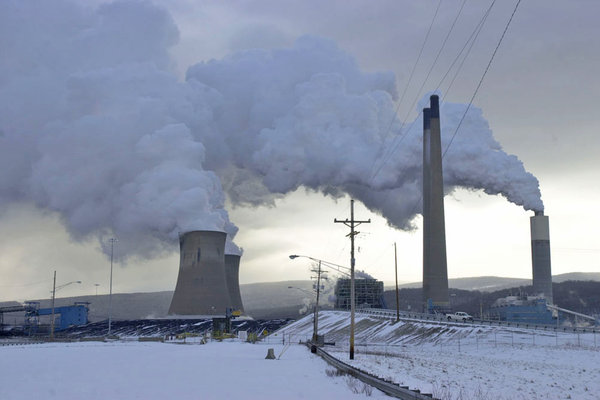 If shut down effectively through local action, the electricity will still have to be generated in some way. Natural gas is the only viable short to medium term option. The carbon emissions are about half that of coal, and the front of the box arguments regarding particulate emissions, mercury and NOx attributed to coal do not apply. The other option, that of a newer and cleaner coal plant, is not economically justifiable if gas remains relatively cheap. Plentiful shale gas will assure that.
However, shale gas is the target of many activists who are fundamentally opposed to all fossil fuel. The back of the box issues of fugitive emissions of methane will not get much traction, especially because of the esoteric arguments involved in the modeling. So they have taken to the matter of methane contamination of water wells, with the powerful backing of a couple of Duke University professors. This is not ideal front of the box material because methane in drinking water is not believed to be a health hazard. But any perceived taint to drinking water is powerful stuff.
The unfortunate aspect to all of this is that it distracts from the real issues, which are use of fresh water and most importantly, the potential for polluting discharge of flow back water from fracturing operations. The methane contamination of water wells, while possible, is easily correctable by best practices, voluntary or forced by rules and penalties. The other two issues require more effort, technical and organizational, and should be the focus of local community action. In the end the combination of effective legislation, technology, and industry cooperation can deliver cheap gas in an environmentally secure fashion. We just need to take the steps to make that happen. Then the side of the box will not matter.
Thanks to Christa WagnerVinson for bringing the NY Times story to my attention
SUSTAINABLE ENERGY: A DOUBLE BOTTOM LINE PLUS AFTERTHOUGHT?
November 30, 2011 § 2 Comments
The definition of sustainable enterprises is the so-called Triple Bottom Line, wherein economic, ecologic and community benefit are all considered and balanced. Is that last leg of the stool given mere lip service or is the practice of energy recognizing this element fully? And ought it to be?
The economic consideration is a given. Without that there is no profit, and absent profit, no enterprise. The ecologic or environmental piece is much in evidence today and few new energy enterprises would dare ignore this element. The societal element is harder to define. One is tempted to think that this is strictly composed of negative impacts upon society, because that is where the rhetoric is directed. In some ways it suits the developers to cast it in this light rather than a more generic one. So, for example, visual pollution is denigrated as a personal preference rather than pollution in the classic sense.
The Reality of Visual Pollution: Perception is reality, the saying goes, and marketing folks know well that this is a powerful adage. One cannot bully people into feeling a certain way. Certainly not in commerce. But on an issue of alternative energy, some nudging, in the Thaler sense, is in order. Richard Thaler and Cass Sunstein wrote a powerful essay Libertarian Paternalism in the top-economics journal American Economic Review. Non-economists, such as I, must not be daunted by the staid prominence of said journal; this is an easy read. A further easier read, one that costs some money or trouble (going to the library) is their book Nudge. Basically they posit the notion that given free choice people generally do not make the best decisions for themselves, even in an economic sense. They need to be given a nudge. The point of all this meandering is that just because folks “feel” a certain way about visual pollution does not mean they cannot be nudged to a different position.
One way to do that is to clarify the options. Until recently the Sierra Club was against coal, nuclear and hydrocarbons in general (coal is a hydrocarbon, but one challenged in hydrogen content, and most think of it as a different species, but it is not). Last time I looked, that position was tantamount to suggesting we grind industry and life as we know it to a halt. And this is me, a life member of the organization talking. Wind and solar are great options. But they are still fledgling and incapable of base load service. In the interests of fairness, the Sierra Club now supports natural gas as a transitional fuel, still to the consternation of much of the membership.
Duke professors recently made famous by their paper connecting well water methane concentrations to shale gas production suggest in an op-ed piece in the Philadelphia Enquirer that we eschew shale gas in favor of wind and solar. No matter that each of these has opposition as well. There are entire communities that will not permit a visible display of solar panels on homes. Wind power has long been opposed on visual lines. North Carolina, the home state of the aforementioned professors, has a law preventing wind farms on mountain sites, known as the Ridge Law. Many communities have strong opposition to offshore wind production in sight of land.
When one flies into Amsterdam airport, wind farms are in abundance in the water. Personally, I think they look like a flock of birds; but I am a techie, what do I know. Perhaps their acceptance is premised on the Dutch having had windmills as a way of life on farms. More likely is the explanation that it is that or Russian gas. In Holland that may not be the direct option, but in Greece, which is dominantly dependent on Russian gas, it would be. Southern Germany still remembers when the Russians capriciously shut down the pipeline through the Ukraine in the cold days of January 2009. So, opposition to something should come hand in hand with a consideration of the alternative. Unfortunately, a well-informed public is an oxymoron, and the fault does not lie with the public.
Societal Benefit: Fair and equitable economic benefit to the local and regional communities ought to be a goal of sustainable energy development. In Australia’s Northern Territories, uranium mining has provided a dividend to each native Aborigine, conjuring up the image of traditionally garbed locals riding on the beds of Toyota trucks. Every resident of Alaska gets an oil related dividend of substance. But these are the exceptions.
One measure would be similar to that in Alaska. Royalties on production would in part be distributed to the county in question. At the very least, this would go to ameliorate some of the damage to infrastructure. In the case of shale gas drilling, the principal one coming to mind is the deterioration of lightly constructed farm roads by heavy trucks. Beyond the issue of mitigation of damage, the community as a whole ought to benefit in some measure from the overall enterprise. The fortunate leasers of mineral rights should not be the only ones to benefit. That sort of inequity is a sure recipe for neighbor turning on neighbor, particularly when the have-not neighbor incurs some direct negative consequences of the activity.
Technology Forks in the Road: Technology choice can often have a direct effect on the local populace. These forks in the technology road fall into two broad categories: benefitting the local environment and aiding the local economy. The first one is an easy choice if other things are about equal. An example of that is in fracturing operations associated with oil or gas production. As the industry became more skilled at drilling horizontally, the increasing reach of a given well allowed a new technology, known as pad drilling. This involves drilling and producing from up to 25 wells from a single location known as a pad. The number of roads needed drops as does the areal extent of the effects of traffic. Also, this aggregation of wells allows for better supervision and oversight to minimize mistakes. Pad technology was developed in Colorado for the express purpose of minimizing road footprint. It now is even more important in farming communities such as in Pennsylvania.
Biofuels could face similar forks. The conventional approach would be to transport the biomass or crop great distances to giant chemical processing plants. Technologies are being developed to bring the mountain to Mohammad, as it were. These must be specialized to not incur the penalties of reduced scale, but that is happening. This will not only reduce road transport, but also it would create local jobs, which in many instances are high paying ones.
Distributed power is another example. Small 50 to 100 megawatt plants using biomass, wind or mini-nuclear, to name a few, could provide localities. In the limit they could eliminate the need for costly and unsightly transmission lines. At short distances, direct current would be a viable and preferred option to alternating current. Edison would have smiled.
In summation, the societal benefit component of energy alternatives need not be an afterthought. Many elements can be brought to bear with no adverse consequences to the economics of the enterprise. Also, the lasting value of being a good citizen cannot be underestimated. It’s simply good business.
Kicking Shale into the Eyes of the Russian Bear
November 19, 2011 § 1 Comment
On January 7, 2009, Russia shut off the natural gas flowing through the main European pipeline in the Ukraine. This was a particularly cold winter and 20 European countries encountered serious shortfalls. Discussed below are the reasons given by all of the players. But the principal point was, and continues to be, that Russia can use natural gas supplies as a weapon to achieve political objectives. In late 2008, Russia threatened to form a gas based OPEC (dubbed OGEC) with Iran and Qatar with the express intent of manipulating world gas prices. Has shale gas dampened their ardor? More on that below.
Unilateral fuel cut off as an instrument of political will would be essentially not possible with oil. Oil is more fungible, and alternative supplies can be brought to bear if a major supplier falters, deliberately or otherwise. It may cost more but you could get it.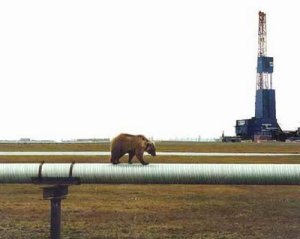
Natural gas is a regional commodity. Bulk transport across land can only be through pipelines, and these are expensive and have long lead times. Transport across the ocean is feasible only if the gas is liquefied. For shorter distances there are exceptions, where gas pipelines cross bodies of water, such as in the North Sea. The liquid product is known as Liquefied Natural Gas (LNG). This process entails cooling the gas to -160° C into a liquid that is 600 times as dense as free gas. This is then transported at near-atmospheric pressure. The low temperatures are maintained by auto-refrigeration by allowing small amounts to boil off, which chills the remaining liquid. An everyday analog is cooling of our skin by a fan or a breeze causing evaporation of our perspiration.
While LNG is a viable alternative to a domestic gas supply, it can only be delivered to a port location, and in fact only one with a re-gas terminal. This high capital cost is unlikely to justify a capability merely to be available for upset conditions. So, as a practical matter withholding of a domestic source is a powerful weapon, LNG alternatives notwithstanding. Also, LNG is more costly. Typically the added cost over the price of the gaseous version is about $3-4 per million British Thermal Units (MMBTU). Transport distance is the determinant of where you are in that range. As a frame of reference, that is roughly the price of natural gas in the US today. So, LNG would essentially double that. This is why cheap shale gas in North America has rendered imported LNG passé.
The sheer distance between producer and user is the reason why natural gas prices are so variable across the world. The price in Europe is about double that in the U.S., and in Japan, about triple. This is in part because costly LNG is the marginal cubic foot, and so sets the price.
Russian Use of Gas as Weapon: Unlike in the Soviet era, Russia can no longer impose its political will through threatened military action. Russian gas is a significant source for most European countries. It is the dominant source for nine countries, including Greece, Finland, Hungary and the Czech Republic. This monopoly allows unilateral action against any one of the countries. Action against too many would result in loss of needed revenue. As a parenthetical point, the Arab Oil Embargo in 1973 had a profound and lasting effect on the price of oil, aside from the short-term privation. But the original political objective was not realized, that of causing a significant shift in support away from Israel. Interestingly, though, the lasting price escalation that was a direct result of the embargo swelled, producing country coffers. This allowed financing of politically motivated actions in other countries, including the funding of Islamic schools known as madrasas in Indonesia and other countries. These are believed by some to be linked to militancy. In any case, there is little doubt that oil money is behind militant Islamism.
In an odd twist, the embargo driven sustained higher prices opened up exploration in promising but costly areas such as ultra deep water and the Arctic, thus reducing dependency on OPEC. Since then, Norway and Brazil have become important players, on the backs of deepwater development.
The Russian action in 2009 was allegedly driven by a dispute with the Ukrainians with respect to poaching on the gas line. While there may have been merit to this, most believe the action was intended to injure the Ukrainian Orange Revolution, which was seen by Russian President Dmitry Medvedev as not commensurate with Russian interests. That the Revolution was suppressed is not in question. The temporal connection strongly implies causality with the gas cut off action. In many ways this act was more effective than would have been a military one. It also undoubtedly sent a message to other European states. Even Western Europe was affected, with southern Germany losing about 60% of its imported gas.
Shale Gas Could Change That: As discussed in a previous chapter, the mechanism by which shale gas accumulates makes it likely to be ubiquitous. So the likelihood of substantial deposits in Europe is high. Initial estimates by the Energy Information Administration (EIA) show large deposits in Poland and France, with smaller amounts elsewhere, including the UK and the Ukraine. Poland is actively exploring and the U.K. is following suit. France currently has a moratorium on fracturing, but is also not as much in strategic need due to low dependency on coal-based power. U.S. efforts to produce gas with a minimal environmental impact will be important in widespread exploitation in Europe. Poland is certainly resolute on the matter. Furthermore, in the U.S., as exploration proceeds, the resource estimates are bound to increase. All new hydrocarbon resource plays follow that pattern.
Gazprom, the mammoth Russian company operating gas assets, has publicly expressed concerns regarding the effect of shale gas on future pricing. The fact that Russia too will have large deposits is irrelevant. A further increase in their resource base is interesting, but not a factor in the concern regarding domestic sources in client countries.
An interesting possibility is that U.S. shale gas could be exported as LNG. Until European deposits are developed, U.S. sourced LNG could be a factor in offsetting Russian supply. If U.S. prices remain low, as is expected, landed LNG in Europe could profitably be at below $9 per MMBTU for some years and closer to $7 today. From a Russian standpoint, this will not be a pricing concern, but certainly the gas as weapon argument is affected. Strictly from an economic perspective, the best sources for North American LNG are Alaska and British Columbia gas, and the most logical target customer is Japan.
OGEC is dead: 60% of the conventional gas reserves reside in Russia, Iran and Qatar. Operating costs are very low, especially in Iran and Qatar. In late 2008, the three announced an intent to form a gas based OPEC, which was dubbed OGEC. (Note: the P in OPEC is Petroleum and by definition, albeit not by common usage, gas is included in the term petroleum, so the acronym OPEC could have applied to gas as well in theory; but with a different cast of characters that would not have made sense.) Alexey Miller, chairman of Russia’s Gazprom, said they were forming a “big gas troika.” He also predicted an end to the era of cheap hydrocarbons, thus signaling the intent of the gas cartel to raise prices and keep them high. OPEC accomplishes this despite supplying only about a quarter of the world’s oil. The Troika would likely have been pretty effective, in part because Russian markets are Europe and China over land, and the other two are much more LNG dependent. So, unlike current OPEC members, at least the senior partner Russia, will be essentially non-compete with the other two except for LNG relief valves for Russian force majeure, contrived or otherwise.
Shale gas over time will kill attempts at OGEC. China is expected to have even more shale gas resource than the U.S. and will exploit it quickly. China National Offshore Oil Corporation (CNOOC) has already taken positions in two U.S. shale gas plays and in the first large one in the U.K. There is little doubt that part of the intent is to transfer technology to China deposits. European shale gas will certainly be a factor. There is reason to believe most of the countries currently importing LNG, including India, have shale gas opportunities. Finally, there is the specter of U.S. as an LNG export player. All of this adds up to a world with a lot of gas in consuming countries and more options. When consumers have options, cartels are ineffective. Gas has always been harder to manipulate than oil. Transportation needs can only be met by oil-derived products. Gas on the other hand can be replaced by coal, wind and solar for power. OGEC can be pronounced DOA, and we have shale gas to thank for that.
So, Where Did All This Gas Come From Suddenly?
November 13, 2011 § Leave a comment
Few will dispute that shale gas has changed the very make up of the petroleum industry. At every twist and turn new resource estimates appear, each vastly greater than the previous. The estimate in 2008 exceeded the one from 2006 by 38%. As with all resource estimates, be they for rare earth metals or gas, disputes abound. But through all the murk is the inescapable fact: there certainly is a lot of the stuff. How could this suddenly be so? The last such momentous fossil fuel find in North America was the discovery of Alaskan oil. But a discovery out in the nether regions is understandable. In this case we were asked to believe that all this was happening literally in our backyard.
To appreciate what happened we first need to understand how oil and gas is formed and recovered. Millions of years ago marine organisms perished in layers of sediment comprising largely silt and clay. Over time additional layers were deposited and the organic matter comprising the animals and vegetation was subjected to heat and pressure. This converted the matter into immature oil known as kerogen. Further burial continued the transformation to oil and the most mature final form would be methane. By and large the only real difference between oil and gas is the size of the molecule. Methane is the smallest with just one carbon atom. One of the lightest oil components, gasoline, averages about eight carbon atoms. Diesel averages about twelve. So, although we refer to them as oil and gas, chemically they are part of a continuum. So, it is easy to understand that they could come from a single source.
The key word is source. The rock in which the oil or gas originally formed is known as source rock. The figure shows a schematic representation of the location of one such source rock. This is almost always shale, which we told you was some mixture of silt and clay and sometimes some carbonates. Conventionally, the fluid in this rock will migrate to a more porous body.

This is depicted as the sandstone shown, which is predominantly silica, an oxide of silicon. It may also be a carbonate, predominantly calcium carbonate. These two minerals are host to just about every conventional reservoir fluid in the world. The fluid (and by the way gas is a fluid, although not a liquid) migrates “updip” as shown to the upper right. This is because the hydrocarbon is less dense than the water saturated rock and essentially floats up, not unlike oily sheens on your cup of coffee.* This migration continues until stopped by a layer of rock through which fluid does not easily permeate. This is known as a seal, and more colloquially, a cap rock. Ironically this is most usually a shale, not unlike where the fluid originated. The trapped fluid is then tapped for production.
The trap is often a dome as shown in the upper left. It can also be a fault. This is when earth movements cause a portion of the formation to break away and either rise or fall relative to the mating part it just separated from. In some instances a porous fluid filled rock will now butt up against an impermeable one, and a seal is formed laterally.

Source: Wikipedia
In the schematic shown the yellow zone would be the sandstone, and the updip fluid shown in red now finds itself abutting an impermeable zone shown in green.
In the early days of prospecting they looked for surface topography indicative of a dome type trap below. These days sound waves reflected back produce excellent images of the subsurface.
Unconventional Gas: We have described how conventional gas, and oil for that matter, are found and produced. The current flurry of activity in shale gas is concerned with going directly to the source. This was previously considered impractical, primarily because the rock has very poor permeability, which is the ease with which fluid will flow in the rock. The permeability of shale is about a million times worse than conventional gas reservoir rock. In fact, as we observed earlier, shale acts as a seal for conventional reservoirs. The breakthrough was the use of hydraulic fracturing. Water is pumped at high pressures, causing a system of fractures. These are then propped open with some ceramic material to hold the cracks open. Without this the sheer weight of the thousands of feet of rock above would close the cracks. The propped open fractures now comprise a network of artificially induced permeability, allowing the gas to be produced. This is akin to pillars and beams used in underground mines.
The sheer ability to extract gas from source rock is now well understood as feasible. But some still doubt the magnitude of the estimated resource. Here is the explanation of why one would expect this resource to be plentiful. Consider that for a conventional reservoir to be formed one needed a confluence of two events. First there needed to be a proximal porous and permeable rock and second, a trap mechanism had to exist. So it would be easy to believe that more source rock did not have these conditions than did. In other words the probability of source rock without a release mechanism was greater than with. This is why it is reasonable to conjecture that the total resource trapped in source rock is greater than the resource that escaped into permeable trapped rock. Further adding to the potential is that this is fresh territory, relatively unexploited. Decades of exploitation have denuded conventional reserves, while the source rock remains relatively untapped.
A word on the nomenclature of resource estimation. A resource estimate indicates the quantity of estimated hydrocarbon accumulation, whether economically recoverable or not. A subset of that is a reserves estimate. Reserves are the portion of the resource that one could recover economically and bring to market. Typically in a new play one would expect reserves to keep getting revised upwards. This is because every new well put on production increases the certainty of the extent and quality of the reservoir, and the reserves can confidently be increased. In reading the popular literature it would be well to keep the distinctions in mind; they are often confused.
*Darker roasts produce more oil. One way to minimize oily sheen is to brew with cold water; also results in a “sweeter” coffee. This is analogous to “sun tea”.
 Research Triangle Energy Consortium